Why Bicycle Accident Claims Need Careful Handling
Cyclists often start at a disadvantage: drivers and adjusters may assume the rider was in the wrong spot or hard to see. Yet a crash a driver walks away from can leave a rider with broken bones or a head or spinal injury.
It makes sense to talk to a lawyer if:
- The driver or an insurance company says the crash was your fault
- A driver opened a door into your path or ran you off the road
- The driver left the scene or hasn't been identified
- You don't own a car and aren't sure whose insurance covers you
- A family member was killed
A consultation with us is free, and there is no obligation. If we take your case, you owe no fee and no costs unless we recover money for you.
How Bicycle Crashes Happen
- Drivers passing too close
- Right hooks: a driver passes a rider, then turns right across the rider's path
- Drivers turning left in front of an oncoming cyclist
- Dooring: someone in a parked car opens a door into a passing rider
- Distracted, speeding, or impaired drivers
- Crashes at night or at dusk
On dooring, Florida law says no one, driver or passenger, may open a car door unless it is reasonably safe and won't interfere with other traffic, including cyclists.
What to Do After a Bicycle Accident
- Call 911: Get medical help and ask for police to come. The crash report is an important record of what happened.
- Get the driver's information: Ask for the driver's name, phone number, driver's license, license plate, and insurance. If the driver leaves, note the plate, the vehicle's make and color, and its direction.
- Document the scene: Photograph the vehicle, your bike, the road, and your injuries. Get witnesses' contact information and note any nearby cameras.
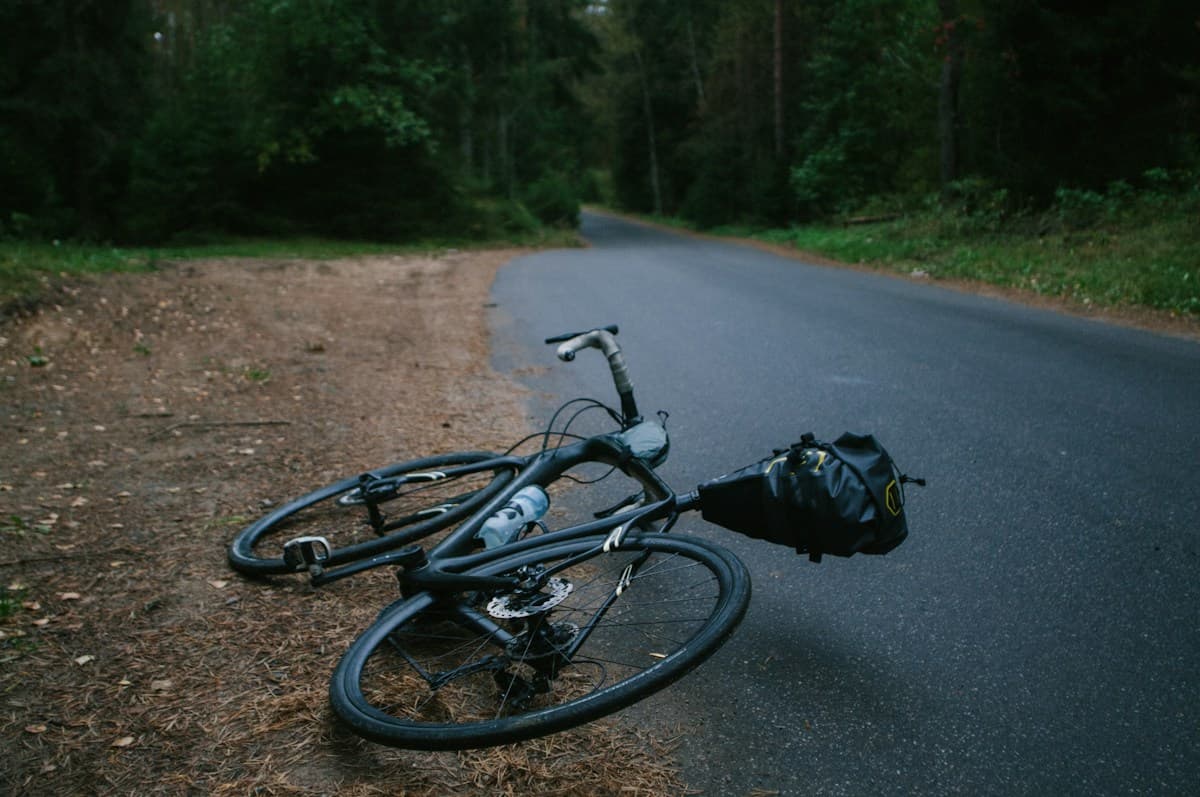
- Keep your bike and gear: Don't repair or throw away your bike, helmet, or clothing. They can help show how the crash happened.
- See a doctor within 14 days: For Florida's personal injury protection (PIP) coverage to pay your medical bills, you generally must get initial medical treatment within 14 days of the crash. Go even if you feel fine; some injuries take time to show up.
- Be careful with insurance companies: Report the crash to your auto insurer (or a relative's, if you're covered there) and meet the policy's requirements, but think twice before giving a recorded statement to the driver's insurer or signing anything it sends you. What you say can be used to reduce your claim.
- Call a lawyer: The sooner a lawyer gets involved, the sooner evidence can be preserved.
Florida Bicycle Laws You Should Know
Cyclists have the rights and duties of drivers
In Florida, a bicycle is a vehicle, and a cyclist has the same rights and duties as any other driver, except where the law sets special rules for bikes. A rider going slower than traffic generally must use the bike lane. If there isn't one, the rider must stay as close as practicable to the right edge of the road. There are exceptions, such as when passing, getting ready to turn left, or avoiding a hazard or a lane too narrow to share safely. On a sidewalk or in a crosswalk, a cyclist has the rights and duties of a pedestrian and must yield to people walking.
The 3-foot passing rule
A driver passing a cyclist in the same lane must leave at least 3 feet. If that can't be done safely, the driver must stay back until it can. The 3-foot rule also applies when the rider is in a bike lane, unless the lane is separated from traffic by a physical barrier, and it protects e-bike riders too.
Helmets and lights
Riders and passengers under 16 must wear a properly fitted, securely fastened bicycle helmet that meets the federal safety standard; Florida law does not require older riders to wear one. And under Florida law, not wearing a bicycle helmet may not be considered evidence of negligence, including the rider's own.
Between sunset and sunrise, a bicycle must have a white light on the front visible from at least 500 feet, plus a red light and a red reflector on the rear, each visible from 600 feet. A missing light doesn't automatically decide a nighttime case, but insurers may use it to argue shared fault.
Electric bicycles
Florida defines an electric bicycle as a bicycle or tricycle with working pedals, a seat, and a motor of less than 750 watts that stops assisting at 20 mph (Classes 1 and 2) or 28 mph (Class 3). An e-bike rider generally has the same rights and duties as any other cyclist, and Florida law does not require a driver's license, registration, or insurance to ride one. Cities and counties may add their own rules, including minimum ages.
PIP and when you can sue the driver
Florida's no-fault rules apply when a car or truck hits a cyclist. Personal injury protection (PIP) generally pays 80% of your reasonable, medically necessary medical bills and 60% of your lost income, up to the $10,000 limit, no matter who caused the crash. Medical benefits above $2,500 are available only if a medical doctor, osteopathic physician, dentist, physician assistant, or advanced practice registered nurse finds that you had an emergency medical condition. If you own a car insured in Florida, your own PIP generally pays. If you don't, PIP on a car owned by a relative you live with may cover you. If neither applies and you are a Florida resident, the PIP on the vehicle that hit you generally pays.
PIP covers a cyclist only if the injury was caused by physical contact with a motor vehicle, such as being struck by a car or by something a car crashed into. If a driver ran you off the road and there was no collision, PIP generally won't pay, though you may still have a claim against the driver, and UM coverage may help if the driver can't be identified.
PIP rarely covers everything. To recover for pain and suffering from the at-fault driver, Florida law generally requires that the crash caused a permanent injury (within a reasonable degree of medical probability), significant and permanent scarring or disfigurement, a significant and permanent loss of an important bodily function, or a death. Even if your injury does not meet that standard, you can still claim from the at-fault driver the medical bills and lost income that PIP does not cover.
Uninsured and hit-and-run drivers
Florida generally does not require drivers to carry bodily injury liability coverage, and some drivers flee. Uninsured/underinsured motorist (UM) coverage can fill that gap. UM is optional, but if you or a relative you live with has it, it generally protects you while riding, not only in a car.
Shared fault
Florida uses modified comparative negligence. If you are partly at fault, your recovery is reduced by your share of the blame. If you are found more than 50% at fault, you generally cannot recover anything from the driver. Insurers often claim the rider ran a stop sign or had no lights, so the evidence matters.
Deadline to file a lawsuit
For crashes that happened after March 24, 2023, Florida generally gives you two years from the date of the crash to file a lawsuit. Crashes on or before that date generally have four years. If you miss the deadline, you can lose your claim entirely. Claims against a government agency also have notice requirements and limits on damages, so talk to a lawyer early.
What Compensation Can You Recover?
Depending on the facts of your case, compensation can include:
- Past and future medical expenses
- Lost wages and lost earning capacity
- Pain and suffering
- Mental anguish and emotional distress
- Loss of enjoyment of life
- Scarring and disfigurement
- Damage to your bicycle and gear
Where Florida's no-fault injury standard applies, pain and suffering, mental anguish, loss of enjoyment of life, and scarring can be recovered from the at-fault driver only if the injury meets it. Medical bills and lost wages can be recovered to the extent PIP has not paid them.
If a cyclist was killed, the family may have a wrongful death claim. In Florida, it is brought by the personal representative of the person's estate, and the deadline is generally two years from the date of death.
How We Build Your Bicycle Accident Case
We move quickly to gather the evidence, including:
- The police crash report and any citations
- Video from businesses, homes, doorbells, and dashcams
- Photos and measurements of the road, bike lane, and sight lines
- An inspection of your bike, helmet, and the vehicle
- Every insurance policy that may apply, including policies in your household
When the facts are disputed, we work with accident reconstructionists. If the insurance company won't make a fair offer, we are prepared to take your case to court.